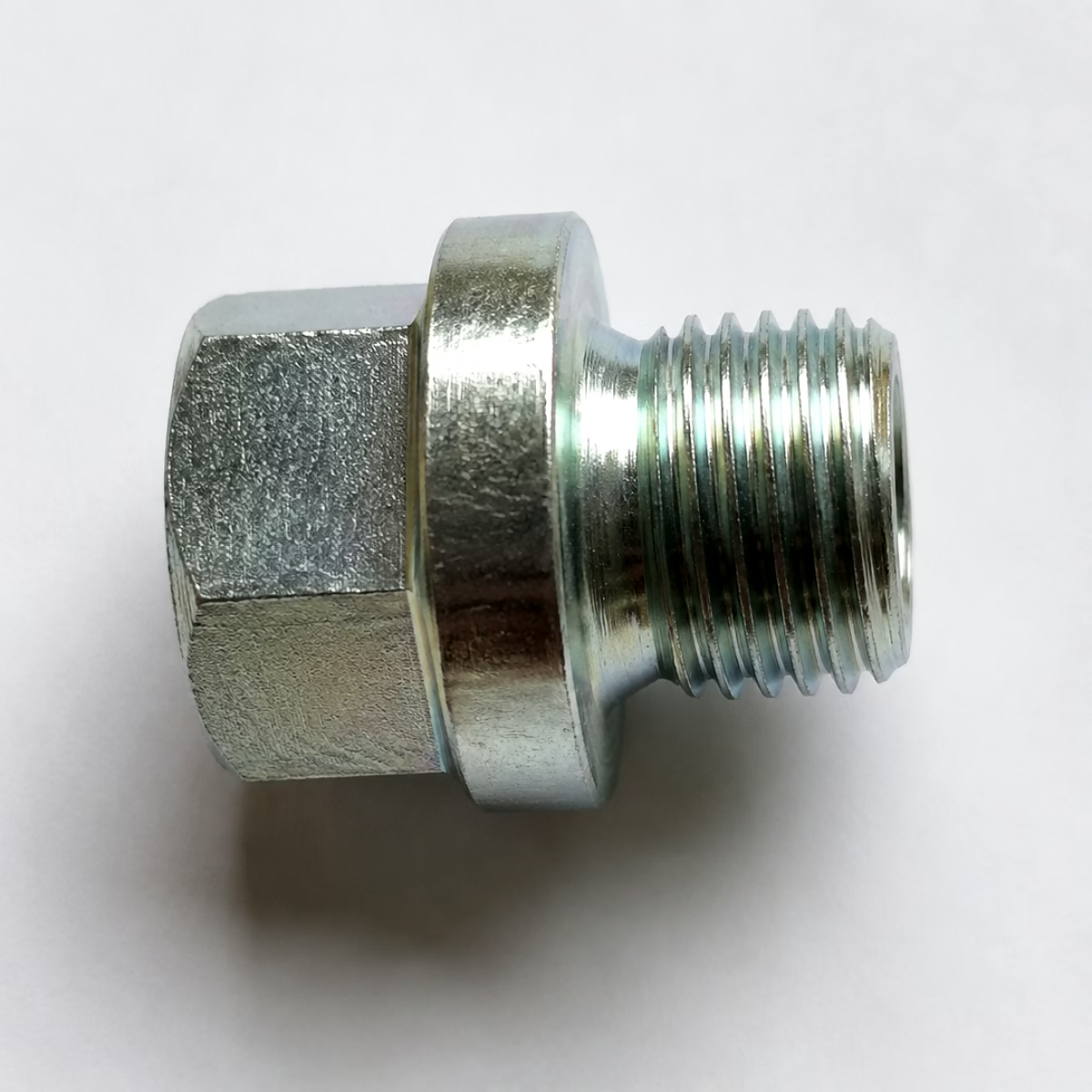
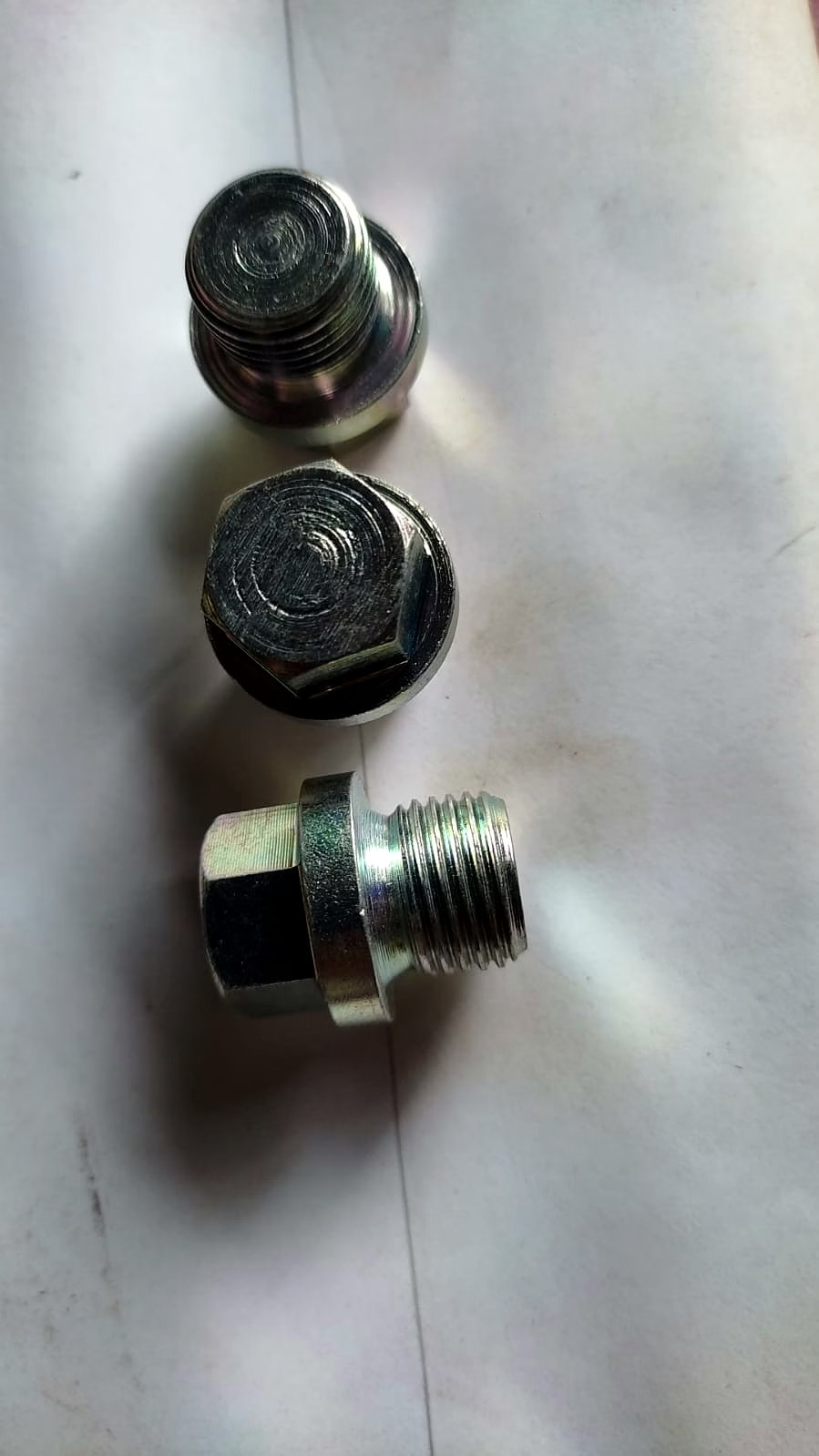
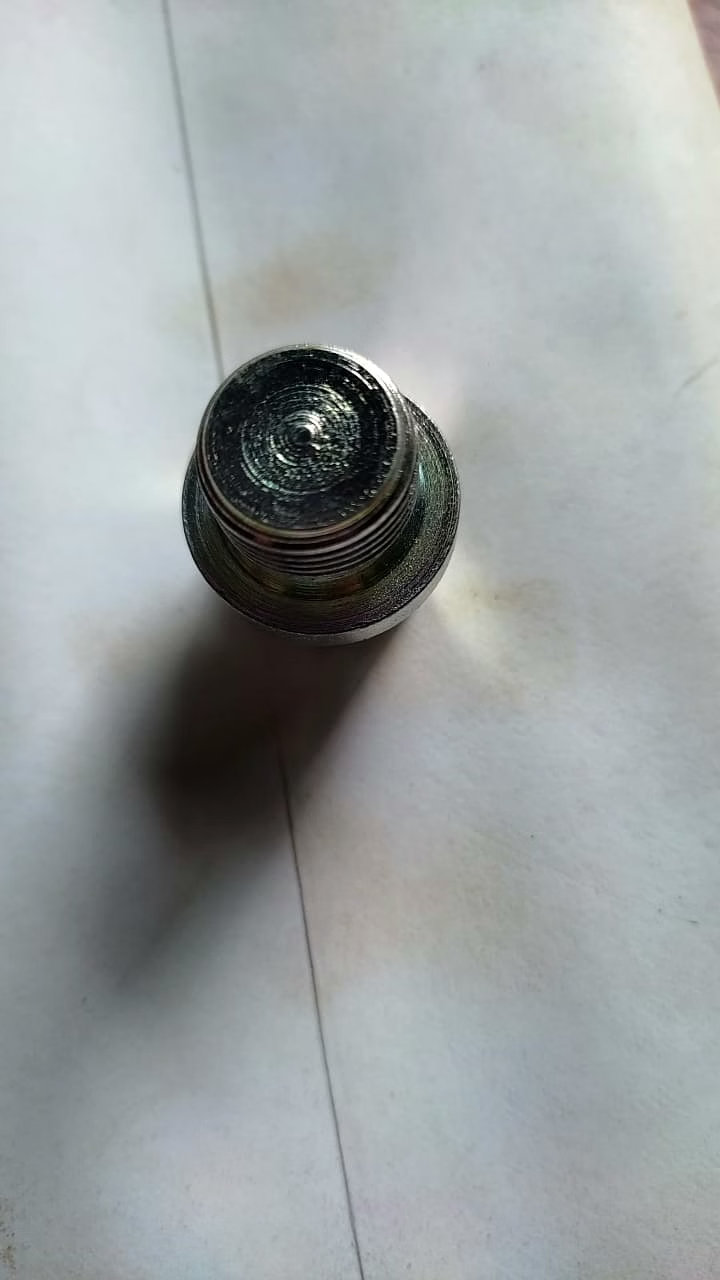
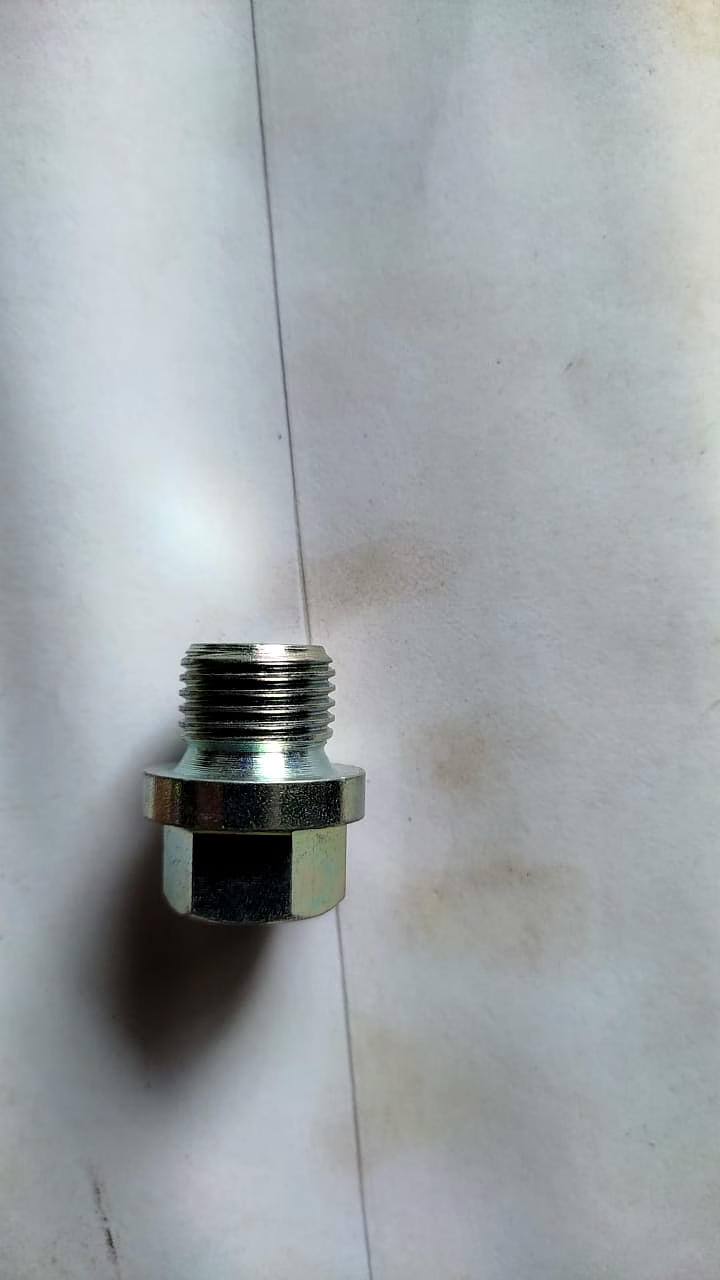


DIN 910 Hex Head Screw Plug
-
Product is not available
Brand:
Country Of Origin : India
DIN 910 Hex Head Screw Plug for Assembly
The DIN 910 Hex Head Screw Plug is a standardized threaded closure used to seal access points and ports in assemblies. It is specified to the DIN 910 form factor and is intended for use where a compact hex-head plug is required for mechanical sealing and maintenance access. Procurement teams, OEM buyers, and maintenance planners identify this part by its DIN designation and hex-head interface.
Dimensional Precision and Fit
This screw plug is produced to maintain consistent thread engagement and repeatable sealing contact. Production tolerances focus on thread conformity and head geometry to enable reliable torque application and leak control. Material options are chosen to match system compatibility and operating environment.
Procurement & Supply Terms
Available for bulk sourcing with scalable production support. Commercial volume procurement is supported for project and scheduled replenishment programs. Lead time and packaging are aligned to batch size and machining route to meet assembly schedules.
Industrial Assembly and Sector Applications
The DIN 910 Hex Head Screw Plug is designed for mechanical assemblies requiring a compact, hex-head closure. It is commonly used in hydraulic and fluid handling housings, access ports on valve bodies, and equipment enclosures where straightforward torque application and concise sealing are required. Buyers should select plug material to match media compatibility and corrosion exposure.
Technical Attributes and Manufacturing Notes
Manufacturing emphasizes thread profile consistency and head geometry control to ensure repeatable fit and torque response. Typical production routes include precision turning and thread rolling followed by inspection. Dimensional inspection focuses on thread class and hex head width across flats to guarantee assembly fit. Where required, surface finishes are applied to improve corrosion resistance and handling properties.
Procurement & Commercial Guidance
Supplies are available at scale and configured by order volume. Production planning depends on part configuration and lot size. Protective packaging is selected to prevent damage to threaded surfaces and hex faces during transit. Buyers planning repeat orders should provide drawing references and expected volume bands to align the production schedule and inspection checkpoints.
Quality and Compliance
Routine quality checks include dimensional verification and thread gauge inspection. Batch traceability and inspection reports can be provided to support incoming quality control. Test evidence is oriented to dimensional conformity rather than product-specific regulatory claims.
Frequently Asked Questions
- What interface standard and tolerance band are supported for this part? Thread and head dimensions are produced to the DIN 910 nominal profile with inspection focused on thread conformity and head width tolerances.
- Can this part be produced from custom drawings and validated tolerances? Yes. Provide detailed drawings and tolerance stamps and the production plan will include the required inspection and process controls.
- What test reports or compliance evidence are available for this SKU? Dimensional inspection records and batch inspection summaries are provided to validate thread and head geometry. Material test evidence can be supplied where requested.
- How do order volume and process complexity affect lead time? Lead time scales with order quantity and any required customizations. Prototype or low-volume runs follow a different scheduling path than repeat production batches.