

Hardened Bush
-
Product is not available
Brand:
Country Of Origin : India
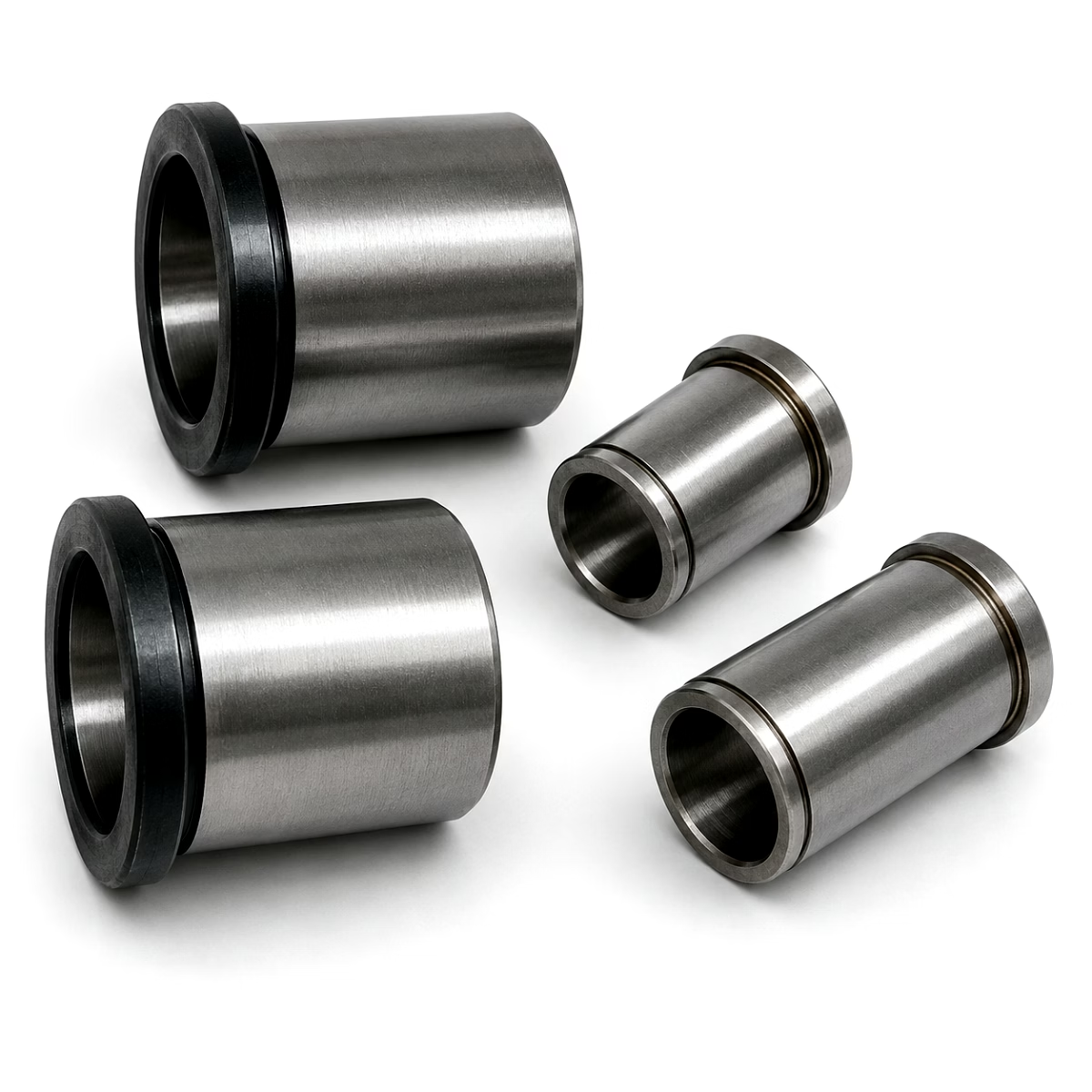
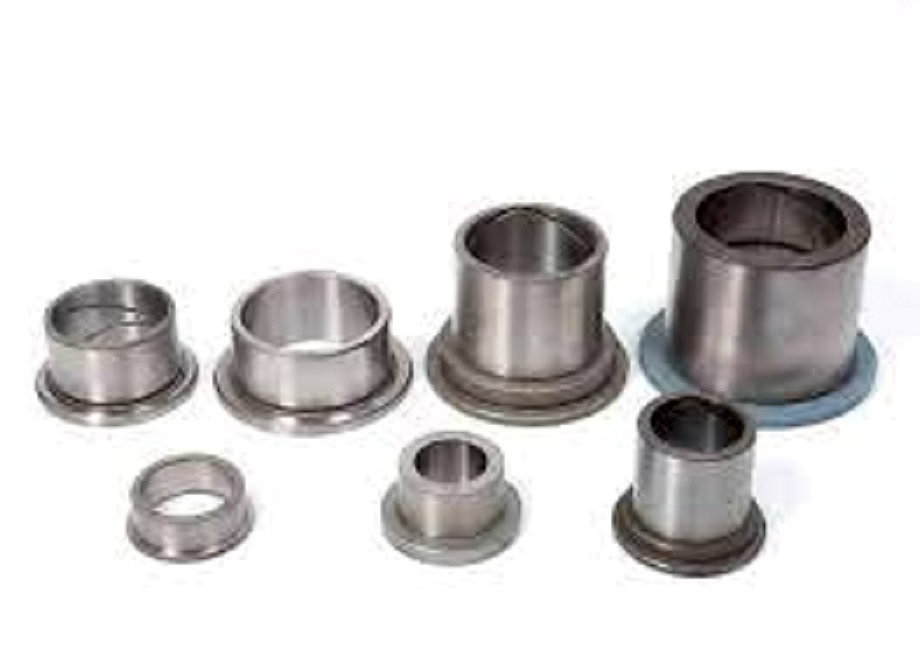
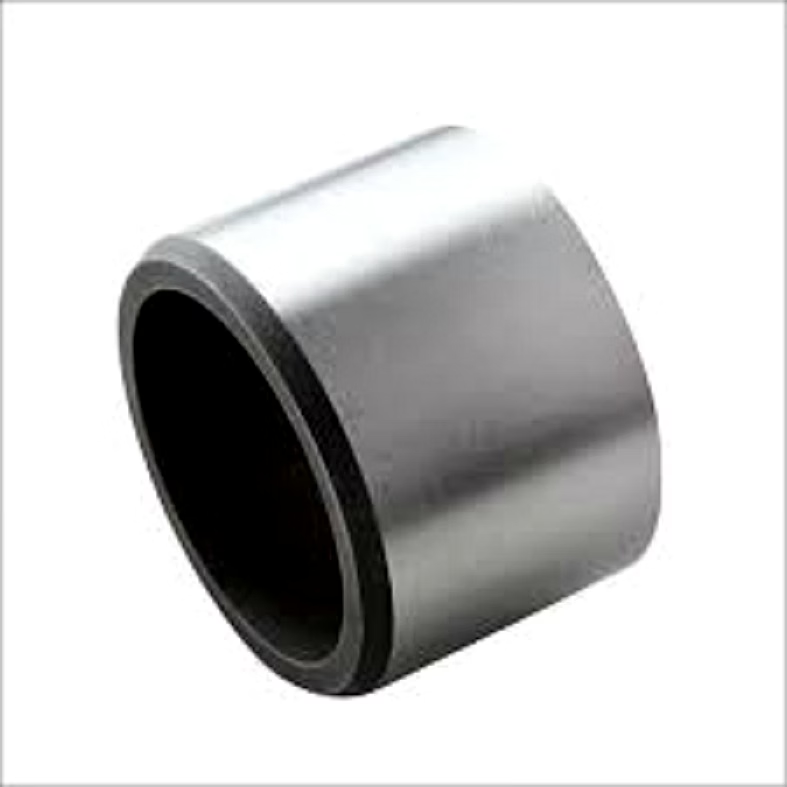
Hardened Bush for Bearing and Wear Interfaces
The Hardened Bush is a cylindrical bearing element supplied for applications requiring surface hardness and wear resistance. It is used where sliding contact or rotational interfaces demand a hardened bearing surface to extend component life. OEM assembly and maintenance teams use this component to control wear and maintain alignment.
Material and Hardening Notes
Production emphasizes surface hardening and dimensional control to ensure interference fit and bearing clearance. Typical hardening processes are selected based on load and wear expectations. Dimensional inspection validates bore and outer diameter conformity to assembly requirements.
Procurement and Supply Terms
Available for bulk sourcing and scheduled supply. Production planning aligns lead time with batch size and process route. Protective packaging is configured to prevent surface damage during transit.
Industrial Applications and Buyer Workflows
Hardened Bush components are applied in rotating shafts, pivot points, and sliding guides where wear resistance improves service intervals. Use-cases include equipment rebuilds, replacement part programs, and OEM integration where tolerance and fit are essential for longevity.
Manufacturing and Quality Control
Manufacturing routes may include turning to nominal dimension, hardening to specified depth, and finish honing to final bore tolerance. Inspection focuses on hardness profile and dimensional conformity. Process controls ensure repeatability for batch orders and provide traceable inspection records.
Ordering and Delivery
Commercial volume procurement is supported. Lead time depends on heat-treatment cycle and post-process finishing. Packaging protects bore and OD surfaces to ensure parts arrive ready for assembly. Buyers should specify fit class and hardness requirement when ordering.
Frequently Asked Questions
- Can the bush be supplied to a specific hardness and fit class? Yes. Specify target hardness and interference/clearance fit and production will include corresponding process and inspection steps.
- Which production methods are used to achieve hardness? Typical methods include induction hardening or case carburizing followed by finish machining as required.
- What inspection evidence is provided? Dimensional inspection and hardness profile records are provided to support incoming verification.
- How does order volume affect lead time? Heat-treatment capacity and finishing workload influence lead time. Larger repeat orders enable scheduled runs that reduce turnaround.